I live in Yuen Long. On some days, I need to drive into Kowloon or even across to Hong Kong Island. Every time, I’m reminded of one of the biggest frustrations of living in the Northwest New Territories: traffic bottlenecks.
For those of us in Yuen Long or Tuen Mun, the commute is unpredictable at best, exhausting at worst. There are really only two main ways out: take the Tai Lam Tunnel or the Tuen Mun Road / NT Circular Road.
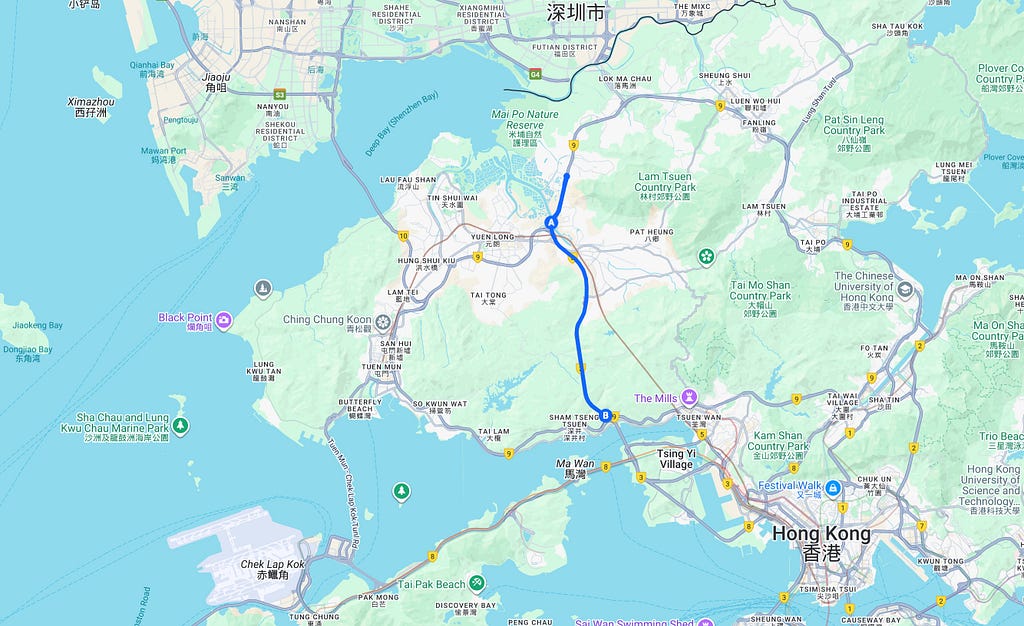
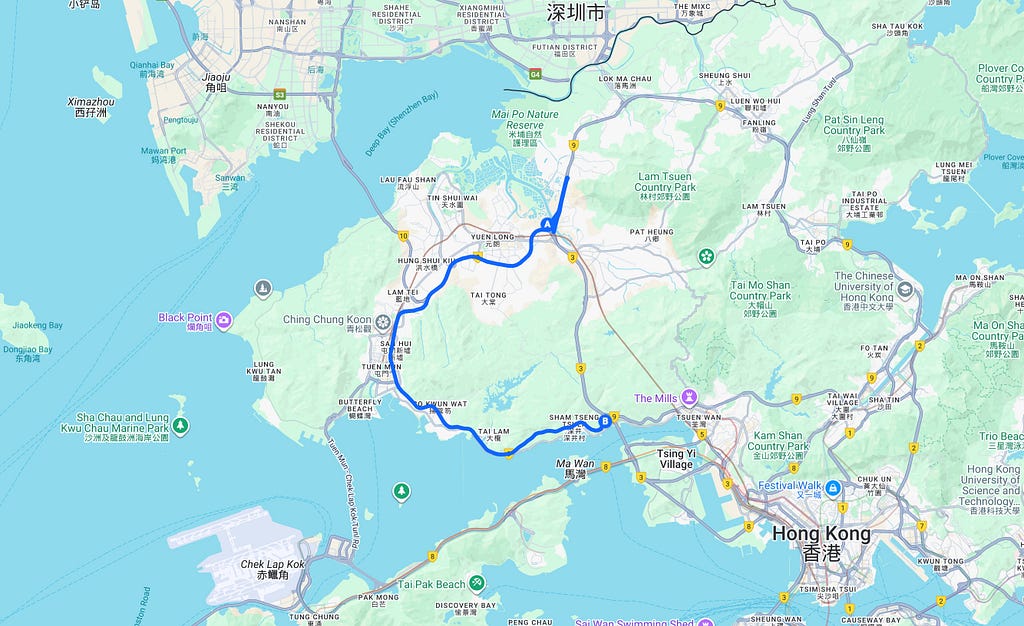
Here’s the problem: during rush hours, when tolls for Tai Lam Tunnel are higher ($45 in the morning and evening peak time slots on weekdays, compared to $30 during normal time slot at the time of writing), many drivers avoid it altogether. Instead, they head for Tuen Mun Road, clogging it up with cars and trucks. For commuters, that means sitting in endless queues. For delivery drivers, it means delays that ripple across the whole logistics chain. For residents of Tuen Mun, it means there’s often no escape from congestion .
The higher tolls nudge people away from the tunnel at the very time it’s needed most.
The Hong Kong government knows this is a serious problem. That’s why they’re planning Route 11, a massive new highway that will link Northwest New Territories to urban Kowloon. It’s an ambitious and necessary project, but it comes with a billion-dollar price tag and won’t be ready at least until 2033. Meanwhile, the government is pushing ahead with the Northern Metropolis development, which means more residents, more businesses, and more cars on the road. Without interim solutions, congestion will only get worse.
That’s where our idea comes in. We asked ourselves: what if we could use something far simpler: human psychology, powered by AI to balance traffic right now?
The concept is straightforward: people make driving choices based on time and cost. By adjusting the toll price dynamically, we can nudge drivers toward or away from Tai Lam Tunnel depending on live traffic conditions. For example:
- If NT Circular Road is jammed and Tai Lam Tunnel has spare capacity, the toll could drop temporarily, encouraging drivers to switch.
- If Tai Lam Tunnel is nearing saturation, the toll could rise slightly to balance flows.
This isn’t just theory. In June 2025, when the government took over Tai Lam Tunnel and reduced tolls, traffic through the tunnel jumped 10% in just one day (source: SCMP). That’s a clear signal: toll price directly shapes driver behavior.
Our project — Smart Dynamic Tolling — uses open data from Hong Kong’s Transport Department. We built an AI-powered simulator that ingests real-time traffic detector data, weather, and even event schedules. The system predicts congestion and recommends optimal toll adjustments every 15 minutes.
The idea is not to squeeze drivers, but to smooth out usage, reduce peak bottlenecks, and keep tunnel revenues steady. And crucially, it’s transparent: new tolls can be displayed on tunnel signboards and even integrated into GPS apps like Google Maps or Waze. That way, drivers immediately see the updated cost and the time they’ll save.
It’s a temporary fix, but one that could provide real relief while we wait for big projects like Route 11. It’s affordable, scalable, and doesn’t require tearing up roads… Just smarter use of the infrastructure we already have.
For those of us living in Yuen Long, Tuen Mun, and the broader Northern Metropolis, solutions like this could mean fewer wasted hours in traffic and more time where it matters.
Hong Kong has always been a city of bold infrastructure. But sometimes, the smartest solutions are the simplest, powered by data, psychology, and a little bit of AI.
If you are interested to learn more about the project, you can find the code on our GitHub or check out the quick demo we developed using traffic simulator here.
P.S. We use traditional AI models to predict the traffic data, not the LLMs 🙏🏼