Meta Description
Discover how to deploy web services in China’s unique internet environment. Learn cloud-native strategies with Alibaba Cloud, Tencent Cloud & the Great Firewall.
Introduction
If your web app works beautifully everywhere, except Mainland China, you’re not alone.
For developers, deploying inside the Great Firewall can feel like a mix of mystery and dark magic: some services time out, some APIs vanish, and CDNs that used to fly now crawl.
In this guide, we’ll go beyond translation and show you what it really takes to make your app China-ready - from cultural context to cloud deployment on Alibaba Cloud, Tencent Cloud, or Huawei Cloud.
Whether you’re a startup expanding east or a seasoned engineer curious about how to deploy web services in China, this walkthrough will give you a clear path through the wall — the legal way.
1. Why China’s Internet Is Different
China’s internet evolved on its own track. Adoption lagged the West by nearly a decade, and by the time mass users came online, smartphones were already everywhere.
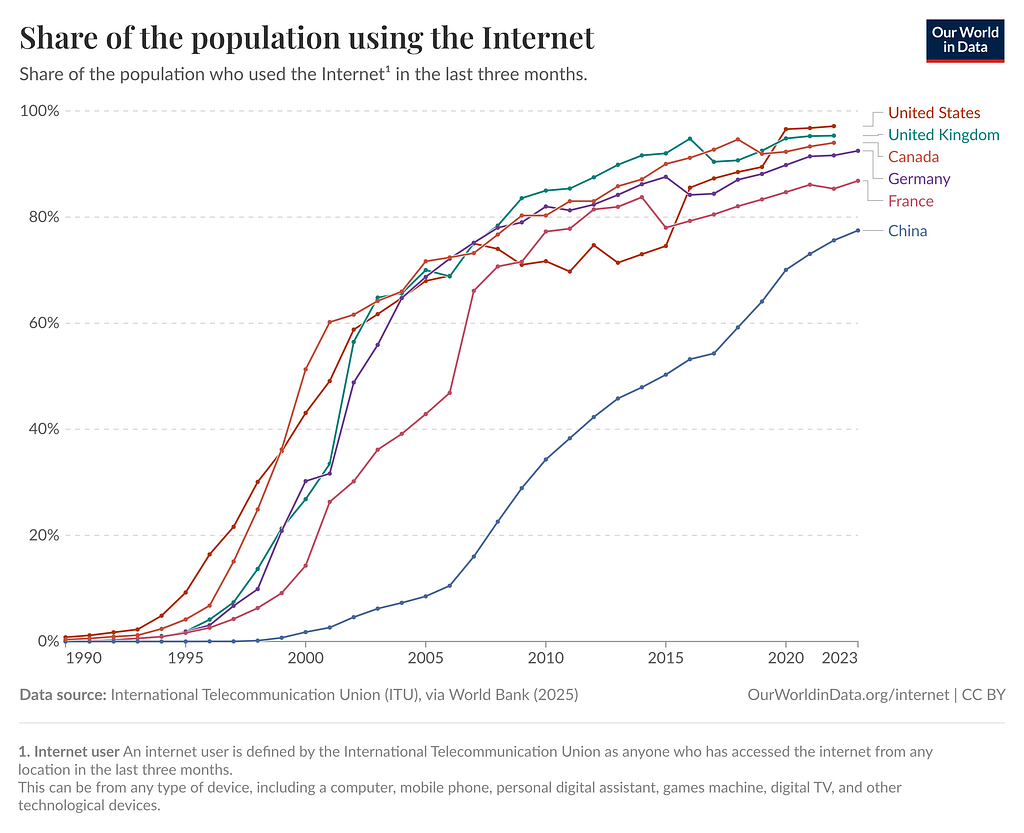
That meant China skipped the desktop era entirely — it went mobile-first head-on.
As a result, the ecosystem built around the mobile web: super-apps, mini-programs, dense UI design, and seamless mobile payments. Combine that with data localization rules and firewall routing, and you get a parallel internet infrastructure.
2. The Great Firewall and Its Impact
The Great Chinese Firewall isn’t just censorship — it’s a complex network layer that filters, inspects, and shapes traffic flow.
From a developer’s perspective, here’s what it means:
- Cross-border traffic latency can increase by hundreds of milliseconds.
- Many third-party resources (Google APIs, YouTube, fonts, Firebase) are inaccessible.
- Global CDNs underperform or get throttled.
In other words, your global cloud architecture isn’t broken — it’s just not optimized for the Chinese internet topology.
3. Cultural & UX Differences That Matter
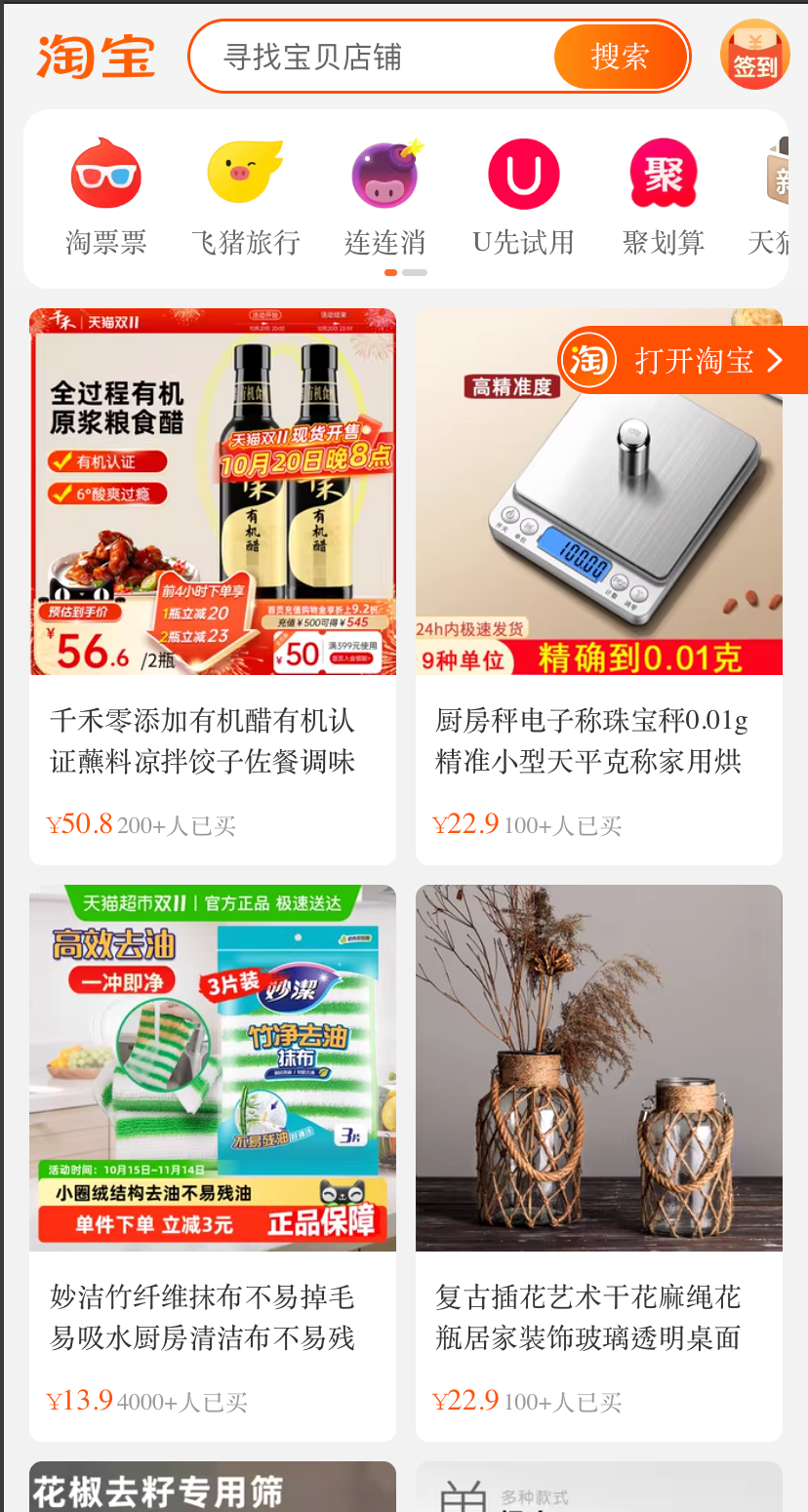

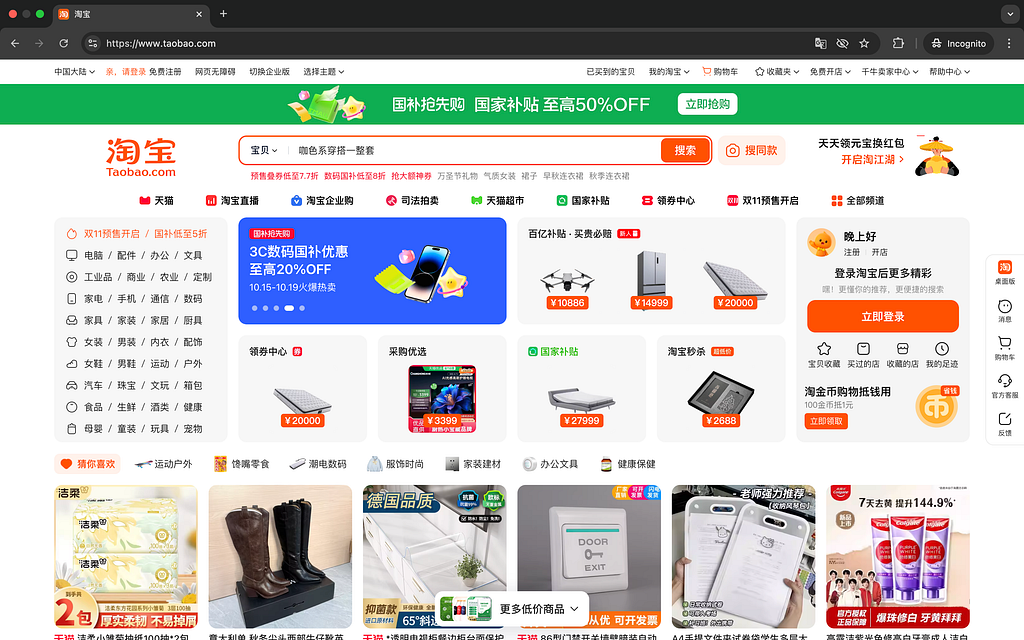
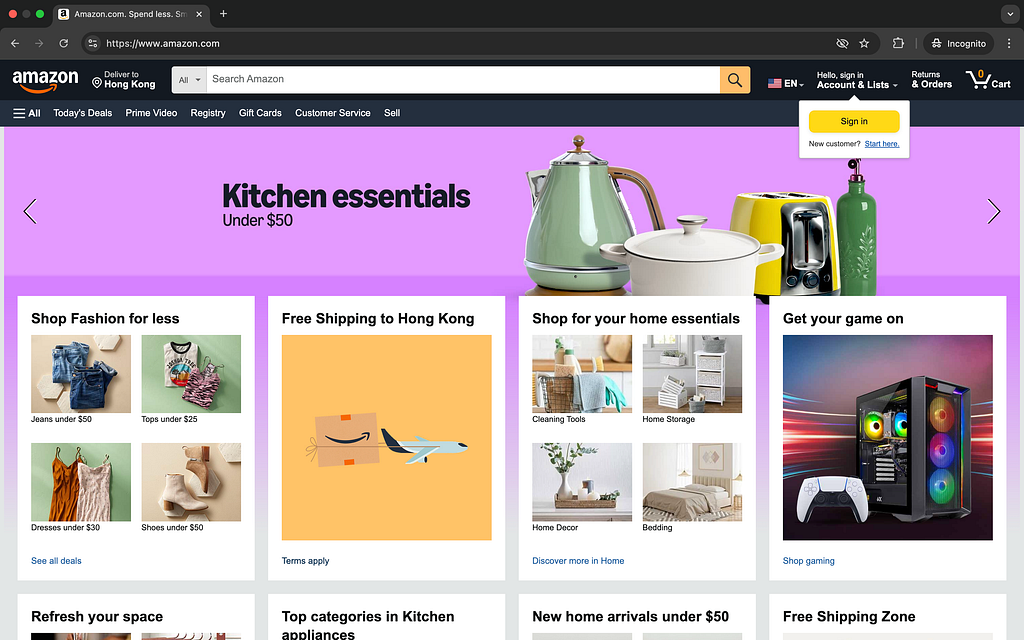
If you compare Taobao and Amazon, you’ll notice it immediately:
- Taobao is dense, dynamic, animated, and full of micro-features.
- Amazon is minimal, structured, whitespace-driven.
Chinese users expect speed, richness, and integration. They trust apps, not websites.
Design for this expectation:
- Mobile-first interactions.
- QR-code-based workflows.
- Embedded mini-programs and in-app experiences.
Localization, in China’s case, means adapting to user psychology, not just changing text strings.
4. Technical Challenges for Deploying in China
Before you plan your rollout, understand the common blockers:
- Network latency: The Great Firewall slows down cross-border traffic.
- Blocked dependencies: Google Fonts, YouTube, Firebase, Cloudflare APIs often fail.
- Hosting restrictions: Without an ICP license, you can’t legally host inside Mainland China.
- App distribution: There’s no Google Play — expect fragmented Android marketplaces.
- Analytics & SDKs: Western tools often don’t work; local SDKs like Umeng are used instead.
Your tech stack might need regional forks or toggles — not just a global clone.
5. Cloud Strategy: Deploying on Chinese Clouds
To make your app fast and compliant, you need to deploy it closer to your users.The three dominant cloud providers in China are:
- Alibaba Cloud (Aliyun) — broadest reach, developer-friendly APIs.
- Tencent Cloud — strong gaming, streaming, and mini-program integration.
- Huawei Cloud — enterprise and hybrid infrastructure focus.
Best practice:
- Use Mainland China regions for serving users inside the Great Firewall.
- Keep non-sensitive data or backups in Hong Kong/Singapore regions for redundancy.
- Combine the two using hybrid cloud deployment with region-aware routing.
6. Compliance Essentials: ICP and MLPS
You can’t deploy inside China without understanding compliance:
ICP License (备案 / 许可证)
- Required for any public-facing site hosted in Mainland China.
- Issued by the MIIT (Ministry of Industry and Information Technology).
- ICP Filing → informational sites.
- ICP Commercial License → apps generating revenue.
MLPS 2.0 — Multi-Level Protection Scheme
- China’s cybersecurity compliance framework.
- Level 2 is typical for SaaS/web apps.
- Covers data protection, monitoring, incident response, encryption.
Compliance isn’t a blocker — it’s an entry ticket to long-term stability.
7. Developer Playbook: Cloud-Native & Firewall-Friendly
Here’s how to build and deploy web apps that actually perform inside China:
- 🧱 Cloud-native mindset — containerize everything.
- 🐳 Host your own Docker registry (Harbor or Alibaba Cloud ACR) since Docker Hub is slow or unreachable.
- ☁️ Use local CDNs — Alibaba Cloud CDN, Tencent Cloud CDN, or Baishan Cloud.
- 🧭 Hybrid routing — serve static assets inside CN, APIs from HK/SG for simplicity.
- 🖋 Self-host assets — fonts, scripts, analytics.
- 📊 Local analytics — Umeng, Sensors Data, or OpenTelemetry for cross-region metrics.
- 🧪 Simulate Mainland conditions — test with VPN throttling or China-based probes.
Think “multi-cloud + multi-region”, not “one global region fits all.”
8. The Developer Mindset Shift
Most localization efforts stop at translation.But real China-readiness requires a mindset shift:
- From monolithic → modular.
- From global CDN → regional edge nodes.
- From foreign API dependence → local integrations.
Localization ≠ translation — it’s architecture.
9. Watch the Full Talk on YouTube 🎥
📺 Watch the full talk: “Make Your App China-Ready: Deploying Inside the Great Firewall”
10. Key Takeaways
✅ The Great Firewall isn’t an obstacle — it’s an environment you design for.✅ Treat China as a region, not an exception.✅ Build cloud-native systems for portability across providers.✅ Replace global dependencies with local equivalents.✅ Compliance (ICP + MLPS) is part of your architecture.✅ Test from inside China, not outside it.
11. Final Thoughts
Deploying web services inside the Great Chinese Firewall isn’t just about getting through filters — it’s about understanding how the ecosystem works and designing accordingly.
If you can make your app China-ready, you can make it anywhere-ready.
🧩 SEO Tags
Great Firewall, deploy in China, Chinese cloud, Alibaba Cloud, Tencent Cloud, Huawei Cloud, China web localization, ICP license, MLPS 2.0, China-ready app
Open Graph / Social Share Image Text
“Deploy Web Apps in China — Cloud-Native Strategies for the Great Firewall”